



Risk Management in Field Service Businesses: Benefits, Challenges, and Solutions
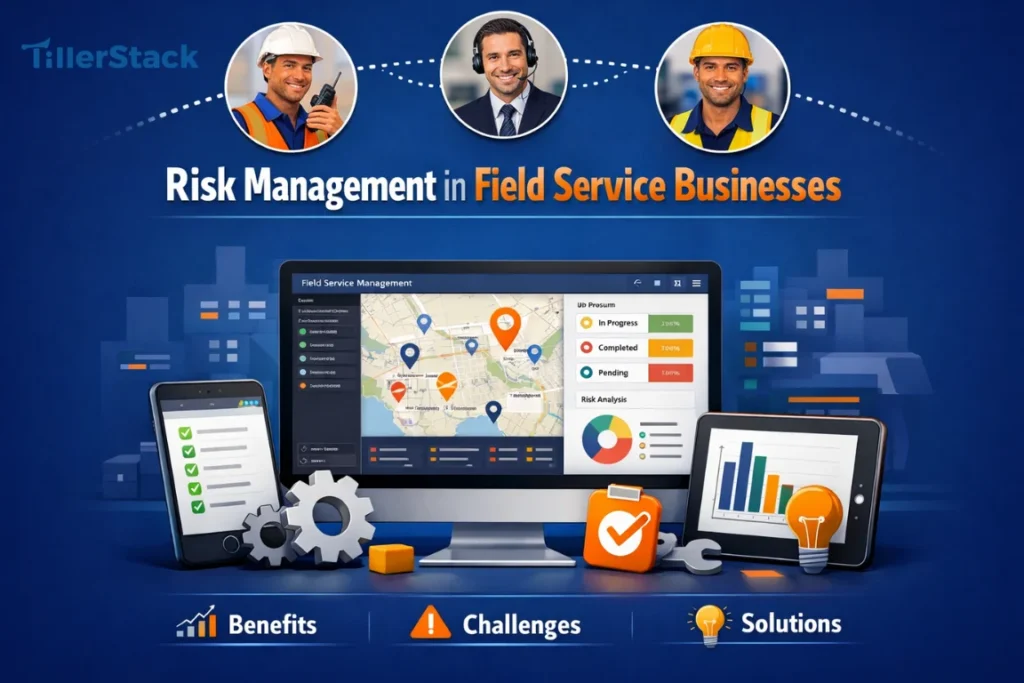
Conditions change, timelines shift, and technicians often make decisions on the spot without direct supervision. Because of this, risk management is mission-critical for U.S. field service companies.
Risk management is not just a formal process on paper; it is what keeps daily operations steady and controlled when the work itself is unpredictable. The pressure increases as industries are increasingly controlled and customer expectations rise. Clients want the least amount of downtime, high data security, and stable quality of service, and the agreements do not allow for errors.
The effects of failing to manage risks appropriately are evident and immediate, including revenue loss, accidents, compliance problems, and negative publicity. Regardless of the type of risk involved, be it operational, financial, safety-related, or regulatory, small issues may soon spiral out of control.
This guide provides a step-by-step plan for identifying risks, uncovering hidden issues through analytics, and leveraging a well-defined roadmap to transform safety and security into a competitive advantage.
What Is Risk Management in Field Service Businesses?
Risk management in this context is the systematic identification, assessment, mitigation, and observation of threats that could affect service delivery, safety, reduce profitability, or violate any regulatory compliance and requirements.
Defining Risk in a Field Service Context
Risk in field service spans multiple dimensions. Each type has distinct drivers and consequences.
- Operational Risk in Field Service
This indicates the issues regarding processes, scheduling, dispatch, management of parts, or workflow execution. Examples include dispatch errors, SLA breaches, and repeat visits.
- Safety Risk in Field Service
Technicians often work at heights, with electricity, heavy equipment, or hazardous materials. Safety risk includes jobsite injuries, vehicle accidents, and environmental exposure.
- Financial Risk in Field Service
Financial exposure arises from cost overruns, warranty rework, revenue leakage, inaccurate billing, and overtime. Inadequate documentation or ineffective operations can lead to a decline in profit.
- Compliance Risk in Field Service
Field service businesses must align with the standards set by occupational safety authorities and other regulatory bodies. Misplaced documentation, incomplete training records, or gaps in contractor oversight can result in fines, penalties, and significant legal liability.
- Technology risk in field service
Mobile devices, cloud platforms, and connected equipment introduce cybersecurity and system reliability exposure. Unauthorized data access, ransomware, or downtime can halt operations and damage trust.
Why Field Service Businesses Face Unique Risk Exposure
Field service businesses operate in locations where risks are naturally present. Technicians spend most of their time on remote job sites, far from the controlled conditions of an office or workshop.
Supervisors can’t manage different locations all at once, which leads to harder monitoring of conditions in real time that leads to an increased chance of mistakes or oversight.
On top of that, service environments are unpredictable. Technicians might enter a residential home one day and an industrial plant the next, facing hazards that are often unknown until they arrive.
Adding to the complexity is the constant changing nature of both scheduling and routing. Emergency calls, last-minute adjustments, and shifting routes make it difficult to maintain oversight and keep operations running smoothly.
The Importance of Risk Management in U.S. Field Service Businesses
In the U.S., regulatory enforcement, customer service-level expectations, and competitive pressure raise the cost of unmanaged risk. It is with regards to protecting margin, guaranteeing compliance, and maintaining brand reputation in a high demanding market.
Financial Impact of Poor Risk Control
In field service, poor risk control quickly translates into real costs. Equipment failures that resulted in downtime, customer disruption, and an increase in expenses could have been prevented through predictive maintenance.
Safety and Regulatory Implications
OSHA compliance for field service businesses requires proper documentation, training records, and hazard mitigation. Incident documentation and audit readiness safeguards organization when inspections are conducted. It is also important to carefully manage contractors and third-party risk.
Reputation and Customer Trust
Brand risk increases when service reliability declines or data security is compromised. Customers want consistent and reliable performance, safe handling of their personal data, and clear communication when incidents take place.
Types of Risks in Field Service Operations
Field service operations face a wide range of risks, each affecting different parts of the business. Understanding the different types of risk allows companies to prioritize mitigation and protect both employees and the bottom line.
Operational Risks
Scheduling and dispatch failures, for instance, can cause missed appointments, customer frustration, and inefficient technician use. Inventory and parts shortages delay repairs, increase repeat visits, and affect overall productivity.
Challenges in achieving high First-Time Fix Rates (FTFR), equipment breakdowns can extend Mean Time to Repair (MTTR), disrupting workflows and creating backlogs. All these operational risks do not only affect service delivery, but also affect customer satisfaction, revenue, and profit margins.
Safety Risks
Technicians often work at heights, deal with electrical systems, handle hazardous materials, or face risks associated with fatigue and driving between job sites.
When there are no proper precautions, these hazards can escalate to injuries or much worse. Conducting pre-job safety checklists and structured training programs is critical, particularly for technicians working remotely or in isolated environments.
Financial Risks
Unplanned costs result from warranty claims that are not properly tracked or managed. Direct effects of billing errors or revenue leakage are on cash flow and profitability. Such financial risks usually occur due to poor documentation, inadequate communication, or poor operating procedures.
Compliance and Legal Risks
Violations can be caused by documentation gaps, e.g., failure to provide safety reports or provide incomplete maintenance records. Lack of training can also lead to situations in which technicians end up doing jobs they are not qualified to undertake, thus creating liability.
Violating labor, environmental, or industry-related regulations may lead to fines, court proceedings, or contractual penalties.
Technology and Cyber Risks
There are a lot of things that can happen to a technician’s personal device, it can be lost, stolen, or infected with malware, putting sensitive customer and operational data at risk. Having access to these systems without any authorization can result in data breaches and regulatory headaches.
System downtime is another major issue, it can disrupt dispatch, reporting, and decision-making in real time.
How to Measure Risk Management Effectiveness
Without measurable indicators, leadership cannot determine whether controls are working. To understand how to measure risk in field service operations, organizations must integrate operational metrics, safety indicators, and financial performance into a unified measurement system.
5 Steps of Completing a Field Service Risk Assessment
A structured risk assessment turns abstract concerns into clear, actionable priorities. Following a consistent five-step model ensures that field service teams address hazards effectively and maintain safety across all operations.
Identify Hazards
The process begins by systematically identifying potential hazards. This includes jobsite hazards, equipment risks, operational vulnerabilities, and environmental exposures.
Insights from technicians and supervisors are important, as are those from on-the-ground staff, who often notice risks overlooked in planning documents. The organization can develop a comprehensive view of potential threats before the actual work even begins by capturing insights from multiple viewpoints.
Assess Risks
When the hazards are recognized, they need to undergo an evaluation using a structured approach. Applying a risk scoring model with a likelihood × impact matrix helps prioritize which risks require immediate attention.
High-probability or high-impact risks are addressed first, preventing reactive decisions that are driven by emotion and ensuring resources are allocated where they matter the most.
Define Controls
After assessing risk, controls should be put in place according to the standard hierarchy. When elimination isn’t feasible, safer alternatives can be substituted, engineering safeguards implemented, administrative procedures established, and personal protective equipment (PPE) provided.
This structured hierarchy ensures that risk mitigation is systematic, rather than ad hoc, and aligns with best practices in field service operations.
Document Findings
The results in the risk register should be documented, and incident reporting processes, standard operating procedures, and compliance documentation should be in place. Effective record-keeping not only helps with audits and regulatory requirements but also serves as a source of continuous improvement and future risk evaluation.
Review and Monitor
Risk regularity and observation require regular checks and balances in field service companies, which can be achieved by tracking KPIs, performing periodic audits, and implementing continuous improvement cycles.
Risk registers are to be updated with the changes in operations, changes in hazards, or new lessons learned. The periodic review will help keep the risk assessment up to date, as controls become relevant over time.
KPIs to Measure Risk Management in Field Service
Risk management only works when you can measure it. Policies are important, but numbers tell you whether those policies are actually working in the field. The right KPIs give leadership a clear view of where risk is building and where controls are holding up.
Leading Indicators
Leading indicators focus mainly on prevention. They indicate whether teams are performing properly before something goes wrong.
When pre-job safety checklists are consistently completed, it usually means technicians are taking time to assess site-specific hazards. Near-miss reporting is another strong signal. A steady flow of reports suggests people are paying attention and speaking up.
Lagging Indicators
Lagging indicators show the outcome of past actions. Incident rate, including TRIR or DART are a direct reflection of actual safety performance. Repeat visit rate highlights quality or diagnostic issues. SLA breach rate shows how often service commitments are missed.
These metrics show where exposure has already materialized and where corrective action is required.
Operational KPIs
Operational performance often uncovers hidden risk. First-Time Fix Rate (FTFR) is one of the clearest signals. If technicians are not resolving issues on the first visit, something in the process is breaking down. Mean Time to Repair (MTTR) shows how efficiently problems are resolved. Longer repair times increase downtime and customer frustration.
Technician utilization and overtime percentage need to be balanced. Overworked teams are more likely to make mistakes. Parts fill rate affects whether jobs can be completed as planned. Customer satisfaction (CSAT) reflects the overall impact of operational performance.
How to Use KPIs Effectively
Weekly operational dashboards enable managers to identify issues before they occur. Monthly safety reviews enable teams to evaluate trends. Quarterly compliance audits confirm that standards are met in different locations. Most importantly, data should feed into continuous improvement.
Building a Risk Assessment Framework
A solid framework starts with consistent risk identification. Each risk should be evaluated using a likelihood and impact matrix so priorities are clear. A risk register tracks exposures, owners, and mitigation steps.
Applying a control hierarchy eliminates, substitutes, and engineers administrative controls, then PPE ensures responses are structured rather than reactive.
Leading and Lagging Indicators to Track
Leading indicators are signs that teams are taking precautions to reduce risk before it results in accidents. Near-miss reports reveal if hazards are noticed early, safety training keeps teams up to date, preventive maintenance reduces equipment failures, and pre-job risk assessments identify site hazards before work begins.
Lagging indicators measure outcomes of past actions. Incident rates show safety performance, repeat visits highlight operational gaps, SLA breaches indicate reliability risks, and warranty rework points to quality issues. Tracking these indicators allows management to have a clear insight into current behaviours and past results.
Operational KPIs That Reveal Hidden Risk
First-Time Fix Rate (FTFR) shows if issues are resolved on the first visit, and Mean Time to Repair (MTTR) indicates efficiency. Proper utilization of technicians and overtime highlights the workload balance and the risk of fatigue.
Parts fill rate affects job completion and repeat visits, while customer satisfaction (CSAT) captures overall service quality. All these KPIs reveal risks beforehand, enabling management to take action before minor issues escalate into bigger problems.
Creating a Risk Dashboard for Leadership
Weekly operational metrics, monthly safety reviews, and quarterly compliance audits should all feed into one dashboard. This allows executives to see trends, ask the right questions, and intervene early.
A well-built dashboard does not just display numbers. It shows whether the organization is staying ahead of risk or slowly falling behind.
Benefits of Effective Risk Management in Field Service
Organizations can experience a lot of benefits when risk management is integrated into their workflow.
Increased Profitability
Reduced rework, fewer SLA penalties, lower insurance premiums, and improved resource allocation contributes directly to margin improvement.
Improved Technician Safety and Retention
Fewer incidents improve morale and reduce turnover. A safety-first culture strengthens workforce stability.
Stronger Customer Relationships
Contract renewals and competitive positioning improves when there is reliable service delivery and transparent processes.
Common Challenges in Managing Risk
The challenge is keeping control of it when work is happening in dozens of different places at once. When your teams are spread out and every job site looks different, small gaps can turn into bigger problems if they are not handled carefully.
Lack of Real-Time Visibility
A technician finishes a job, fills out paperwork later, and by the time it reaches the office, the moment has passed. When there are no real-time updates, it is hard to identify patterns.
Maybe the same type of incident keeps happening on similar jobs, but no one connects the dots because the reports are delayed or incomplete.
Inconsistent Processes Across Teams
Even with company guidelines in place, one branch might be very strict about documentation, while another takes a more relaxed approach. When leaders look at the data, it does not always reflect reality. Some risks are overreported, others are underreported, and it becomes difficult to get a clear, company-wide picture.
Resistance to Change
Technicians already have full schedules, tight deadlines, and demanding customers. If a new process feels like extra admin work, it will not be a priority. With the lack of proper training and clear communication about the reasons why the change matters, adoption slows down.
Scaling Risk Controls During Growth
Growth is exciting, but it brings complications. New regions may have different regulations. Contractors may follow different safety habits. More jobs mean more moving parts. If oversight fails to grow alongside the business, risk controls can start to stretch thin without anyone noticing right away.
Solutions: Building a Risk-Resilient Field Service Operation
Standardizing Risk Assessment Procedures
Implement digital pre-job safety checklists, standardized workflows, and centralized incident reporting systems.
Leveraging Field Service Management Software
Modern field service management (FSM) software enhances operational control through utilizing real-time job monitoring, compliance documentation automation, and providing predictive maintenance alerts. With built-in analytics, it improves dispatch, scheduling, and overall risk visibility.
Training and Culture Development
Accountability in leadership and constant improvement programs, it embeds risk awareness into daily operations.
Developing a Business Continuity Plan
Business continuity planning for field service includes emergency response procedures, backup systems, and crisis communication protocols to minimize disruption.
MTTR reduced by 18% Overtime decreased by 12% SLA breach rate significantly reduced The structured approach improved operational efficiency and risk while strengthening customer trust.
Real-World Scenario Example
When we examine risk management on how it plays outside an actual operation, it becomes tangible. The following scenario illustrates how structured Risk Management in Field Service Businesses directly improves performance, profitability, and safety outcomes.
Example: HVAC Field Service Risk Breakdown
After evaluating field operations, the HVAC provider identified several underlying risks it encountered daily. They included a low first-time fix rate, a high repeat-visit rate, low safety checklist completion, and high overtime.
They seemed manageable separately, but when the two issues were combined, there was operational pressure, escalated costs, and safety exposure.
To determine which risks to address first, leaders used a straightforward scoring system based on likelihood x impact. The high-risk categories were repeat visits and low first-time fixes, as they were common and had a direct impact on costs, customer satisfaction, and SLA compliance.
Gaps in safety checklists occurred less frequently but were rated high in impact because they raised potential compliance and liability issues. This scoring also helped the team focus on underlying issues rather than superficial ones.
The company subsequently implemented realistic controls to mitigate such risks. Digital safety checklists were implemented, service data was used to improve parts forecasting, technicians were retrained on specific assignments, and dispatch workflows were optimized using real-time routing tools.
The changes were to be structured so as not to create an additional burden on the existing operations.
In half a year, the key performance indicators had been enhanced. There was an increase in first-time fix rate, a decrease in repeat visits, and a reduction in overtime hours and safety awareness among the teams.
The findings indicate that a dedicated, systematic approach to risk management can soon lead to enhanced productivity, safer practices, and improved service delivery.
Frequently Asked Questions (FAQ)
What is the biggest risk in field service businesses?
The biggest risk varies by sector, but operational risk in field service combined with safety exposure often creates the highest financial and regulatory impact.
How often should field service risk assessments be conducted?
Risk assessment must be conducted annually, alongside with a regular review during important operational changes or expansion. High-risk environments may require quarterly reviews.
What KPIs measure risk management effectiveness?
Key indicators include FTFR, MTTR, incident rate, SLA breach rate, warranty rework percentage, preventive maintenance compliance, and near-miss reporting frequency.
How does technology reduce operational risk?
Technology helps in improving real-time visibility, document automation, supports predictive maintenance and risk reduction, and supports structured dispatch and scheduling risk management.
Conclusion: Turning Risk Management Into Competitive Advantage
Effective risk management enables organizations to turn uncertain situations into new business opportunities. Field service companies can enhance their operations by conducting risk assessments, which enable them to track essential performance indicators and manage risk effectively.
TillerStack enables teams to manage potential risks through its system for controlling dispatch operations, tools for overseeing performance, and intelligent field operational processes.
Field service companies today need to implement their compliance obligations as a tactical advantage, as it helps create safer work environments, higher productivity, and better business results.