



How to Identify Hazards in the Workplace: A Comprehensive Guide
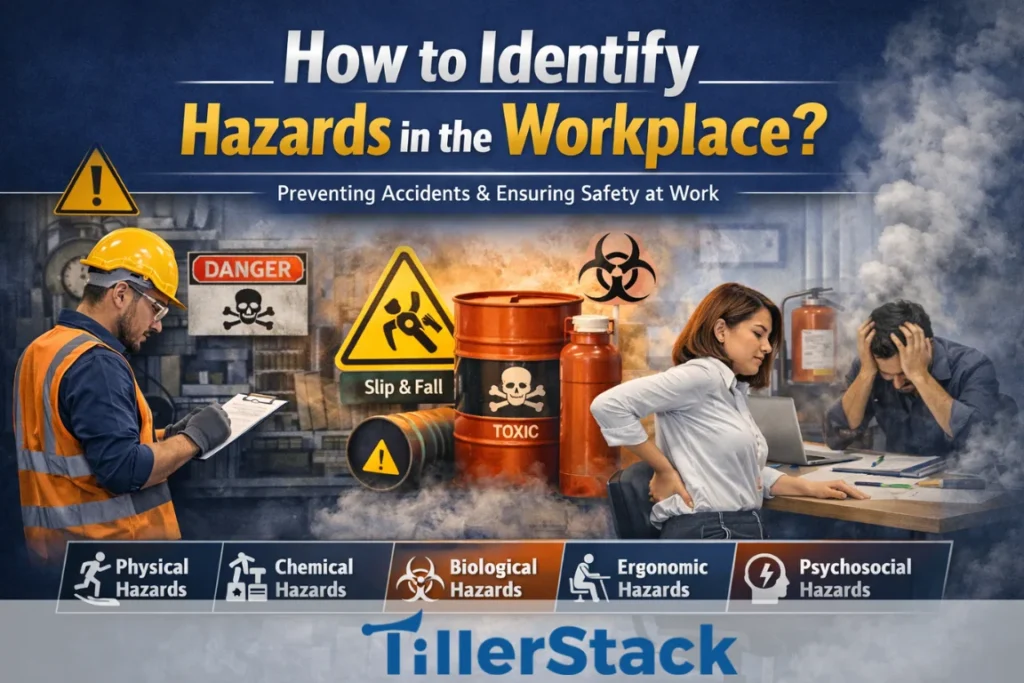
The importance of hazard identification lies in its ability to prevent incidents before they escalate into injuries, operational disruptions, or regulatory consequences.
Organizations that actively monitor and manage common workplace safety risks establish stronger operational foundations and demonstrate responsibility toward workplace safety and team member well-being.
Workplace hazards take the form of moral values, absence rates, and the impact of work environment hazards on productivity. Companies that invest in hazard recognition foster a safe working environment where employees can perform effectively without unnecessary risk exposure.
What Are Workplace Hazards?
The definition of workplace hazards simply refers to anything that might be a process or behavior capable of causing injury, illness, or psychological harm. Learning about workplace safety hazards means recognizing the potential sources of harm at work, present in equipment, environments, or organizational structures.
These may originate from unsafe working conditions, improper processes, or communication failures. Collectively, they represent physical and mental workplace risks that influence both immediate safety and long-term well-being.
Common Types of Workplace Hazards
Physical Hazards
Physical hazards in the workplace represent visible risks that can result in immediate injury. These include slips, trips, and falls at work, often caused by unsafe floors, obstructed pathways, or falling objects. Such conditions significantly increase workplace accident risk.
Additionally, machinery safety hazards pose serious threats, particularly when machines are unguarded or when maintenance procedures are insufficient.
Chemical Hazards
Chemical hazards in the workplace arise from exposure to hazardous chemicals encountered during manufacturing, maintenance, or laboratory operations.
Environmental exposure to fumes and vapors, improper storage practices, and inadequate hazardous-material handling practices elevate chemical spill risks. Implementing solid workplace chemical safety protocols is essential for reducing risk.
Biological Hazards
Biological hazards in the workplace affect sectors where workplace exposure to bacteria and viruses is possible. Healthcare institutions frequently encounter biological risks, but offices and industrial facilities may also face mold exposure at work due to environmental factors.
Exposure to infectious diseases at work, bloodborne pathogens, or environmental contaminants introduces significant contamination risks. Proper sanitation, protective equipment, and monitoring protocols are critical mitigation measures.
Ergonomic Hazards
Ergonomic hazards in the workplace are usually caused by improper workspace layout or task execution. Issues like poor workstation setup contribute to recurring strain injuries, which reduce efficiency and lead to more medical leave.
Challenges related to workplace ergonomics often manifest as musculoskeletal disorders, back pain, or poor desk posture. Addressing ergonomic-related risks through equipment adjustments and customization, and through training, promotes comfort and better performance among employees.
Psychosocial Hazards
Psychosocial hazards at work involve organizational and interpersonal stressors, including workplace stress and burnout, bullying and harassment at work, and other mental health risks in the workplace. Engagement and retention are at risk when there is excessive workload pressure or a toxic work culture.
Fostering policies that support employee mental well-being contributes to team stability and collaboration.
Why Identifying Hazards is Crucial for Workplace Safety?
Preventing Injuries and Accidents
Preventing workplace accidents depends on early hazard identification supported by structured accident prevention strategies. Organizations that systematically evaluate risks succeed in reducing workplace injuries, limiting compensation claims, and operational disruptions.
Legal Compliance and Risk Management
Compliance frameworks demand structured safety oversight. OSHA hazard identification, adherence to workplace safety regulations, and achieving occupational safety compliance contribute to effective workplace risk management. Proper alignment with EU workplace safety protocols and ISO 45001 hazard identification standards fortifies global accountability.
Enhancing Employee Well-Being and Productivity
A safe workplace culture helps employees feel secure and directly impacts productivity and workplace safety. Providing a message of safety and security to workers promotes worker stability and higher output.
5 Ways to Identify Hazards in the Workplace
1. Conduct a Workplace Safety Audit
A workplace safety audit examines work conditions, equipment, and procedures to identify hazards before they escalate into incidents.
A thorough audit should examine machinery condition, workstation layouts, fire exits and emergency routes, lighting levels, and general housekeeping standards. Depending on operational risk levels and regulatory requirements, audits may be performed quarterly, biannually, or annually.
Effective audits involve multiple stakeholders, including safety officers, supervisors, and employees, ensuring both technical oversight and practical insight from daily operations. Using standardized checklists or digital audit application software promotes consistency, documentation, and follow-up monitoring.
2. Engage Employees for Hazard Reporting
Employees play a critical role in hazard identification because they continuously interact with workplace conditions. Their direct exposure allows them to notice risks that formal reviews might overlook.
Organizations should promote open reporting by encouraging workers to raise concerns encountered during routine tasks. Mechanisms such as anonymous reporting systems, digital forms, or feedback channels can remove hesitation and improve participation.
Frontline workers often detect emerging hazards early, and their involvement strengthens safety culture while enabling faster intervention. Empowering employees to contribute promotes shared accountability, improving the overall work experience and protection.
3. Inspect the Workplace Regularly
Routine inspections complement formal audits by providing ongoing monitoring of conditions that may change over time. These kinds of onsite or physical walkthroughs allow easy identification of hazards that develop between scheduled reviews.
Inspection frequency should closely match operational complexity, weekly in higher-risk environments, monthly in moderate-risk settings, and quarterly in low-risk workplaces. Attention should be directed toward floors and walkways, workstation setups, fire safety equipment, and adherence to personal protective equipment (PPE) protocols. Using inspection forms or mobile applications can streamline reporting and allow real-time tracking of recognized issues, ensuring hazards are documented and addressed efficiently.
4. Analyze Job Tasks and Processes
Hazard identification can also be made through JSA, which assesses hazards arising from specific work activities. This involves assembling a set of tasks, arranging steps, and assessing potential hazards to each step.
Ideally, workers should be co-located during the analysis, as this allows direct discussion with employees about problems on the job and safety risks.
For example, examining manual lifting techniques in warehouse operations may reveal ergonomic risks, while reviewing office workflows may reveal posture-related strain.
5. Evaluate Emergency and Hazardous Situations
Expecting any emergency situations is another vital dimension of hazard recognition. Organizations must evaluate current states that could escalate into incidents such as fires, chemical spills, or equipment failures.
This involves assessing potential triggers, training personnel in evacuation and first-aid procedures, and checking the availability of emergency resources. Preparedness plans, safety drills, and simulation exercises help teams identify vulnerabilities before they become realities.
Proactive assessment improves readiness and exposes hidden hazards that might otherwise go unresolved.
Tools and Techniques for Hazard Identification
Hazard Identification Checklists
Checklists provide a structured approach to hazard detection by guiding evaluators through predefined inspection points.
Sample checklists may include categories covering environmental conditions, equipment safety, and emergency readiness. Their primary advantage lies in improving efficiency, documentation quality, and accountability throughout the identification process.
Digital Tools and Mobile Apps for Hazard Reporting
Technology-driven solutions have changed the landscape of hazard identification and monitoring. Mobile applications and safety management systems enable in-time reporting, photo documentation, and centralized data storage. Solutions such as iAuditor, Safety Culture, and other safety-related software enhance hazard tracking, improve communication between teams, and support data-driven risk mitigation.
Regular Safety Inspections and Walkthroughs
This observation, combined with walkthroughs, reinforces hazard awareness across the organization. These constant checks allow for prompt identification of new risks arising from operational or environmental changes.
Safety management systems based on inspections and corrective actions capture trends, report compliance, and hold people accountable for remediation actions.
Best Practices for Documenting and Managing Identified Hazards
Hazard Documentation Templates
Standardized templates provide consistency when recording hazards and their mitigation strategies.
- Date and location of hazard
- Description of risk or unsafe condition
- Initial risk severity assessment
- Recommended action and responsible personnel
- Timeline for resolution
These structured forms support thorough hazard documentation and simplify communication between departments.
Risk Evaluation and Prioritization
Identifying hazards is only the first step; probability and impact must be assessed in a formal risk assessment process. Not all hazards are of equal urgency; priorities mean resources are first directed to the most pressing threats.
A commonly used method involves applying a risk matrix that evaluates:
- Likelihood of occurrence
- Severity of potential harm
Implementing Corrective Actions and Monitoring
Once hazards are evaluated, organizations must translate findings into corrective action plans. On this stage, it will be determined whether identification efforts will lead to a meaningful risk reduction. Action plans typically outline:
- Required mitigation steps
- Assigned responsibilities
- Deadlines
- Verification procedures
Workplaces in this generation often rely on project management software to monitor progress and maintain transparency. These service tools promote collaboration and camaraderie while ensuring consistent monitoring of workplace hazards.
Legal and Regulatory Requirements for Hazard Identification
OSHA and Global Safety Standards
The Occupational Safety and Health Administration provides globally known guidance about workplace hazard assessment and mitigation. Meeting OSHA hazard identification requirements involves systematic risk evaluation, documentation, employee training, and the implementation of preventive controls.
Beyond OSHA, organizations that operate globally usually follow international frameworks addressing occupational health regulations and broader workplace safety laws. These standards emphasize proactive identification, reinforcing hazard assessment as an ongoing operational duty.
Reporting Requirements and Safety Audits
Transparent reporting practices ensure that hazards are properly addressed rather than ignored. Documenting incidents and maintaining records supports internal accountability and regulatory evaluation. Regular safety compliance audits evaluate adherence to policies, procedures, and legal obligations.
Through consistent reporting and structured audits, organizations maintain alignment with national and international expectations while also promoting a work ethic grounded in accountability and responsibility.
Case Studies: Successful Hazard Identification in Different Industries
Manufacturing Industry
In manufacturing settings, manufacturing workplace hazards include machine safety risks and chemical exposure. At one facility, workers bypassing guards to maintain high-speed production is an example of an industrial hazard.
These hazards lead to injuries, downtime, and regulatory penalties. Solutions involved redesigning machine safeguards, training operators, and implementing monitoring systems.
Office/Corporate Environments
Office safety hazards often appear subtle. Sitting for long periods contributes to ergonomic discomfort, underscoring the importance of ergonomic risk assessment, while unmanaged deadlines amplify workplace mental health risks.
The organization resolved these problems through ergonomic assessments while developing a safety culture that enhanced employee morale and productivity.
Healthcare Settings
Hospitals encounter severe healthcare workplace hazards, particularly biological exposure risks. During pandemic response scenarios, maintaining PPE compliance in healthcare proved essential. Failure leads to infections and staffing shortages. Systematic training and supply monitoring drew risks and ensured continuity.
Conclusion
Continuous hazard identification is key to preventive workplace safety and long-term safety improvement. Hazards change with technology, processes, and organizational culture. Consistently assessing and remediating these hazards ensures a safer workplace.