



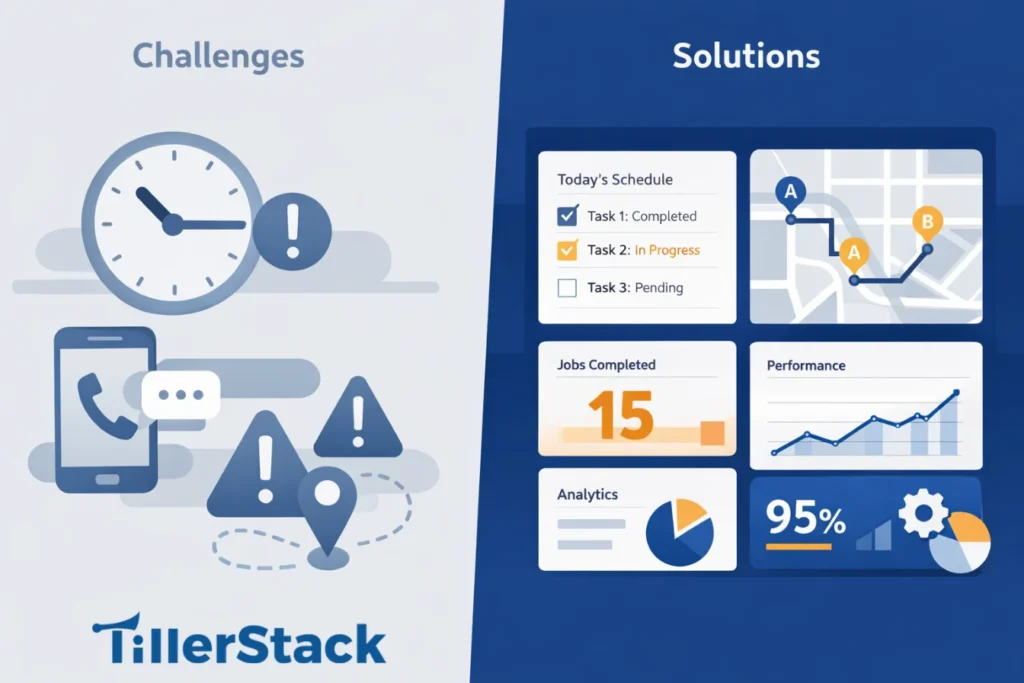
Field service teams today have more problems than ever before. Customers want quick answers, clear updates, and dependable results. At the same time, many businesses are dealing with fewer technicians and higher operating costs.
These pressures don’t just make work harder every day; they can also hurt profits, hurt customer relationships, and make it harder for a business to compete.
They require teams to handle complex machinery, coordinate a mobile workforce, and integrate physical work with remote monitoring. Meanwhile, the managers should maintain the focus on compliance, fulfill the service agreements, and keep costs low. This complexity can quickly become too much to handle without the right systems in place.
This guide is all about real-world ways to deal with these problems. It provides insights on how to make scheduling and dispatch better, increase technician productivity, use automation and AI effectively, and create operations that can grow.
Common Field Service Operations Challenges

Scheduling, managing the workforce, making data visible, and keeping customers happy are all problems that field service operations face. These problems aren’t just one-off events; they build on each other and affect almost every part of field work.
Service Council research shows that almost 47% of scheduled appointments don’t go as planned. This shows how widespread the effects of inefficient operations are. Not only is this annoying for customers, but it also costs money by lowering revenue per technician and raising operational costs.
Other studies show that inefficient field service workflows can cut productivity by 20–30%. This shows that businesses that want to stay competitive must now optimize their operations.
Scheduling and Dispatch Inefficiencies
Scheduling is still one of the biggest problems in field service. A lot of businesses still use spreadsheets or old software, which causes:
- Overlapping or missed appointments
- Routes that aren’t very efficient and take too long to get there
- Bad technician assignment based on skills and distance
These issues have a direct impact on response times and the cost of doing business. Research shows that scheduling problems can cost each technician 2 to 3 productive hours a day, which can add up to tens of thousands of dollars a year for mid-sized service teams.
Another big problem is that job assignments are taking too long. When dispatchers can’t quickly reassign tasks because they can’t see them well, urgent jobs may be put off, and customers have to wait. Routing that isn’t efficient not only costs more in gas, but it also costs more to keep the vehicle in good shape over time.
Some signs of bad scheduling and dispatch are:
- Changing appointments a lot
- Longer times for technicians to travel
- More overtime to meet service contracts
To fix these problems, we need smart scheduling tools that use real-time data, technician skill sets, and job urgency to make the best use of daily tasks. With automated scheduling, it can help to decrease travel time by approximately 35%, which means technicians can do more work and make customers happier.
Low Technician Productivity and Skill Gaps
Problems with technician productivity often come from not having the right skills or not getting enough help. Technicians may encounter issues trying to finish jobs quickly if they don’t get structured training and proper field guidance.
This is where managing field technicians becomes very important.
Some common problems are:
- Technicians given jobs they aren’t fully trained for
- Not being able to get real-time help while on field visits
- Paperwork that takes up time instead of billable work
A study says that technicians spend an average of 7 hours a week on administrative work, which could be automated or made easier. This lack of efficiency hurts both productivity and morale.
Low productivity means low quality of service, which leads to an increase in costs. It is essential to eliminate any skill gaps by providing the technicians with training programs and methods for people to share their knowledge.
Technicians can get real-time instructions and reference materials when they use digital support tools, which helps them finish tasks faster and more accurately.
Ways to boost productivity that work:
- Use on-demand learning modules to keep improving your skills
- Use AR or remote help tools to show technicians what to do in real time
- Use digital forms and automated reporting to cut down on administrative work
Businesses can cut down on repeat visits, speed up the time it takes to finish a job, and make customers happier by doing these things.
Poor Visibility and Lack of Real-Time Data
A lot of companies have systems that don’t work together, which makes it hard to keep track of technician activity, job status, and equipment health in real time. Managers have to make decisions based on old reports when they don’t have accurate data, which leads to missed chances and inefficiencies.
Some of the problems that come with poor visibility are:
- Taking too long to make decisions and respond
- Not using resources correctly
- Customers who are unhappy and missed SLAs
Companies that have access to real-time field data correct issues 18 % of the time the first time, compared to those that cannot. Companies that can view all aspects of their service processes can address issues before they occur, manage resources efficiently, and maximize staff.
Solutions include field service platforms that work together to offer:
- Updates for technicians on the go
- Dashboards for managers that show reports in real time
- Predictions about possible service delays
Investing in service operations visibility pays off by lowering downtime, increasing efficiency, and making customers happier.
How to Overcome Field Service Workflow Challenges

Optimizing the workflow for field service is the most essential step to take in order to solve operational issues and have a better overall performance. Companies that will consider these strategies first can make lesser mistakes, increase in productivity, and provide better service.
Standardizing Field Service Processes
Developing a workflow that can be reused all over again and is reliable is the first step in enhancing field service processes. Standardization makes sure that all technicians follow the same steps, which lowers the chance of mistakes and makes things more consistent.
It’s very important to set up standard operating procedures (SOPs) for field teams. With SOPs around, it helps teams to perform the usual service tasks, equipment check ups, and customer service.
Standardized processes help technicians focus on tasks that add value by cutting down on rework and getting rid of steps that aren’t needed. This improves both productivity and service quality.
Improving Job Scheduling and Route Optimization
Effective field service task management depends on practical scheduling and smart route planning. By considering distance, traffic, and technician skills, companies can reduce travel time, lower fuel costs, and keep appointments on schedule.
When unforeseen issues take place, with dynamic job reassignment, it helps managers to adjust quickly. GPS-based routing and automated scheduling tools make these changes simple, helping field service operations stay consistent and reliable.
Using Automation to Solve Field Service Management Challenges
Field service automation is changing how companies manage technicians, equipment, and customer communication. Automated systems handle routine tasks, provide real-time updates, and reduce manual errors.
By building automation into daily operations, businesses can lower downtime, control costs, and ease common field service management challenges.
Mobile Workforce Management for Technicians
Mobile workforce management tools give technicians instant access to the information they need on the job. With field service mobile apps, they can receive updates, follow digital checklists, and log completed work directly from the field. This reduces paperwork, minimizes errors, and gives managers a clear view of progress as it happens.
You Can also Read: How to Maximize the Benefits of Mobile Workforce and Field Service Management
Service calls can usually be done in areas with weak or no signal at all, and work can’t stop because of connectivity issues. Apps that can be accessed without internet connection allow technicians to update job statuses, add service notes, and capture customer signatures without disruption, keeping operations moving even in remote locations.
AI and Predictive Tools in Field Service Operations
AI is playing a growing role in field service operations by helping teams catch issues before they turn into major failures. Predictive maintenance tools analyze equipment performance data to spot warning signs early.
When a potential risk is identified, automated alerts instantly notify technicians so they can solve it before it escalates to serious issues such as downtime or emergency repairs.
These forward-looking tools also improve planning. By anticipating service needs, organizations can assign the right technicians at the right time, reducing scheduling conflicts and improving first-time fix rates. When AI insights are combined with automation, businesses can maintain strong service quality while running more efficient field operations.
Improving Technician Productivity and Workforce Management
Managing field technicians well is important for getting the most out of your workers and making sure they provide good service. Companies can make technicians more productive and cut down on problems at work by prioritizing on training, sharing knowledge, and tracking performance.
Training, Knowledge Sharing, and Remote Support
Training programs for technicians are important for filling in skill gaps and making sure that service is always the same. Learning platforms that can be easily accessed let technicians acquire instructional materials whenever they need them, which helps them keep learning.
Technicians can fix problems on their own on the field without waiting for someone to assist them personally, thanks to AR-enabled support and live expert advice. By offering remote support along with training programs, businesses can improve technician productivity, fewer service delays, and make customers satisfied.
Performance Tracking with Field Service KPIs
To manage a workforce properly, it is important to closely monitor the performance metrics of your technicians. Field service KPIs such as first-time fix rate, mean time to repair, and job completion rates provide actionable insights into operational efficiency.
Keeping an eye on these KPIs also helps with strategic workforce planning. By analyzing performance trends, organizations can anticipate staffing needs, address skill gaps, and implement targeted training programs. An approach that is data-driven to field technician management guarantees consistent service quality and growing operational improvement.
Reducing Costs and Managing Risks in Field Service Operations
Field service organizations face constant pressure to reduce costs while maintaining high service quality. By streamlining processes and implementing risk management practices, businesses can achieve cost savings and mitigate operational hazards.
Cost Control Through Process Optimization
Service cost reduction strategies often start with process optimization. Removing repeated jobs, having better scheduling, and centralizing workflows can definitely reduce operational costs.
Operational efficiency in field service is not just limited in lowering costs, but it helps in allocating resources properly on customer-centric activities.
Optimized processes also help minimize waste. Technicians will spend more time working than travelling, improved allocation of materials, and service tasks are done more efficiently. By aligning cost control measures with operational improvements, organizations can achieve sustainable savings without compromising service quality.
Risk Management and SLA Compliance
Field service risk management is critical for protecting both employees and customers. Identifying potential hazards, establishing safety protocols, and monitoring compliance ensures a safer and more reliable service environment.
SLA management challenges like meeting response times or contractual obligations can be mitigated with the use of structured risk management methods.
Proactive risk management also supports customer trust and business continuity. By expecting any service disruptions and integrating contingency plans, organizations can maintain SLA compliance, reduce liability, and improve overall operational resilience.
Best Practices for Scalable Field Service Operations
When companies develop repeatable workflows, invest in growing their workforce, and adopt equipment that supports daily operations, they can definitely evolve with confidence. The result is steady growth without sacrificing the quality of service customers expect.
Building a Customer-Centric Field Service Model
Customer satisfaction is a result of having operational efficiency. Prioritizing first-time fix rate improvement ensures that customers receive fast, effective solutions, enhancing their overall experience. Businesses that prioritize customer welfare can build loyalty, reduce complaints, and increase repeat business.
Keeping customers informed regarding technician arrivals, service progress, and resolution time lengths solidifies trust and enhances perceived service quality. By pairing operational excellence with prioritizing on customer needs, field service organizations can achieve growing success.
Tactics include:
- Real-time appointment updates
- Follow-ups post-service
- Quick response to escalations
Choosing the Right Field Service Software
Field service software solutions are vital for managing modern operations more effectively. Cloud-based field service management platforms standardize scheduling, reporting, and workforce tracking, providing managers with real-time insights.
The right software allows smooth integration with existing workflows, lessens manual workload, and gives better data visibility. Choosing a flexible, user-friendly platform ensures that organizations can scale their field service operations while maintaining high performance and service quality.
Benefits:
- Real-time visibility
- Reduced manual work
- Scalable processes
Platforms like Tillerstack offer capabilities for job assignment, predictive maintenance, and mobile workforce management without introducing unnecessary complexity.
Conclusion
To solve problems in field service, you need to take a big-picture approach that includes training workers, improving processes, and using new technology. Companies that make their field service work more efficiently can reduce waste, increase technician productivity, and make customers happier.
By fostering automation and a culture of learning, field service teams can perform difficult tasks more and meet higher customer satisfaction by keeping an eye on how well they are doing.
The digital transformation, coupled with software solutions that keep pace with the business, will ensure the long-term growth of the business and provide businesses with a means to compete in a saturated marketplace.
These strategies can help companies not only fix problems with field service, but also run their businesses more quickly, efficiently, and with a focus on the customer.