



Why Remote Assistance Is Becoming Essential for Modern Field Operations
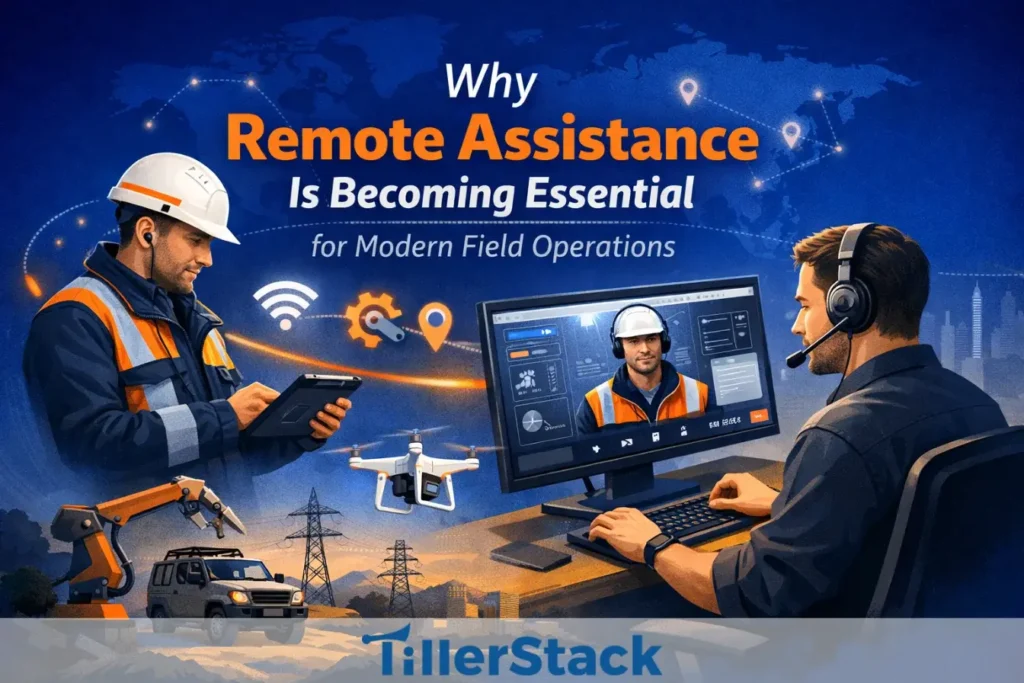
The pandemic has caused a drastic change in the economy, as well as in field operations, where physical presence was previously an absolute must.
The industry is now moving rapidly towards remote field service, which means understanding “what is remote support” becomes crucial. This change laid the groundwork for tools such as Onsite remote Assist (Osra+), making them not only possible for remote collaboration but highly efficient.
Rather than waiting for an expert to come on-site, Osra+ connects them through remote assistance with technicians via live video, augmented reality overlays, and interactive guidance, making collaboration quicker and smoother.
This leads to a reduction in delays, improved communication, and tasks being delegated to the workers. The higher initialization rate and lower downtime are further demonstrated, considering its ability to expand.
Moreover, remote support not only has the qualities of being convenient and dependable but also enhances the overall efficiency of the workflow, thus meeting the increasing expectations of customers and businesses.
To understand how this works in practice, it is helpful to examine what remote assistance is and how it operates.
What Is Remote Assistance & How Does It Work?
If you have ever wondered, “what is remote support,” it is a way for experts to assist technicians who are primarily assigned to field operations.
However, in such cases, how can they support when they are not physically present? That’s when remote support extends its purpose by letting external specialists visualize the field situation instantly. With solutions like TillerStack’s On‑Site Remote Assist Osra+, you bring expert eyes and hands into the field.
Experiencing an issue on-site is inevitable, which puts the technician in a bind. In this case, with Osra+, a technician in the field can start a “remote assistance service” session right from their device with just one click.
This method enables experts to observe the problem in real-time via a live video feed. This means that the expert is standing next to the technician even though they might be miles away.
In addition, Osra+ technology utilizes live video, AR overlays, and real-time assistance, enabling technicians to resolve problems quickly and efficiently at a lower cost and with reduced risk.
It is a wise solution for enterprises that want to remain efficient, accommodate stringent service demands, and cope with dynamic changes by utilizing remote assistance services. Understanding this, it becomes clear why remote assistance is crucial for modern field operations.
Why Remote Assistance Is Crucial for Field Operations?
Demand for expertise is up due to a need for experienced staff, modern equipment, and cost pressures. Remote assistance provides live instruction even when experts are absent.
This approach enables technicians in the field to contact specialists directly, receive faster responses to problems, resolve issues more quickly, correct errors efficiently, and complete tasks reliably.
Thus, among the benefits of remote support are quicker problem-solving, reduced downtime, and lower operational costs, all of which contribute to making operations run more efficiently.
With both remote and on-site support in a hybrid model, businesses can maintain efficient, responsive, flexible field operations that adapt to changing demands.
Today, in a fast-paced world, remote assistance is essential to reliable and efficient field service.
Key Benefits of Remote Assistance for Field Teams
Faster Problem Resolution & First-Time Fix Rates
One of the benefits of remote support is that it enables technicians to resolve issues more quickly through remote assistance and gain immediate access to expert insights.
This improved collaboration directly enhances first-time fix rates and boosts customer satisfaction.
Reduced Truck Rolls and Operational Costs
With the aid of remote help, the situation improves, both in terms of reducing truck rolls by avoiding unnecessary dispatches and relying heavily on remote assist software instead. Hence, this would lead to a drastic cut in operational costs while keeping service teams more efficient.
Real-Time Guidance for Less-Experienced Technicians
Utilizing the benefits of remote support would also mean empowering less experienced technicians through remote assistance and receiving real-time feedback from experts. This would improve their skills, productivity, and reduce the risk of costly errors or service delays.
Improved Safety with Hands-Free AR Support
If technicians have the leverage to use remote assist software, such as hands-free AR support, this could keep them safe by displaying instructions directly within their line of sight, rather than relying on handheld devices or manuals.
This type of remote help would only reduce distractions and allow them to focus on their tasks even in complex environments.
Remote Assistance vs. Remote Desktop: Understanding the Difference
It’s easy to assume that all remote support tools are the same, which causes confusion for most of us. However, if we can distinguish between these two types of remote technologies, it will lead us to understanding that the difference is essential for field operations.
Moreover, differentiating these tools would steer the companies to optimize both IT support and field service workflows.
- Remote desktop is primarily used for IT support, allowing specialists to connect to and control users’ computers remotely to diagnose software issues or manage systems.
- Remote assistance enables the technician to be guided by an expert via live video or AR assistance, receiving instructions that allow them to perform hands-on work correctly and securely.
Understanding the clear distinction between remote assistance and remote desktop will greatly help organizations choose the right tool to invest in field operations. This means that choosing remote assist software is a smart move because it provides not only visual guidance but also interactive support.
What Is the Primary Purpose of Remote Assistance Software?
Many have wondered, “what is the primary purpose of remote assistance software?,” as it has not been tackled much, which made many people contemplate. To put it, it is about empowering field technicians, reducing downtime, and ensuring problems are solved quickly.
The advantage of having software for remote assistance is that it supports technicians, who often experience difficulties in solving complex problems with the tools they need.
For example, a junior technician can connect with an expert and receive guidance or follow live AR guidance to solve a complex situation. In this case, it will resolve issues immediately, reduce downtime, and avoid delays while maintaining the work quality.
By integrating expert guidance and hands-on support, remote assist software empowers the field team to operate smoothly with confidence. Offering real-time support and reducing downtime, this approach ensures that it can achieve faster repairs, consistent results, and safer work environments.
How Remote Assistance Enhances Remote Field Service Workflows
In this generation, where fast-paced field operations are favored by most, integrating remote assistance services into workflows can now transform how teams work, considering that they have access to real-time guidance and structured tools.
It offers work orders as digital checklists, allowing technicians to follow structured processes while staying connected to experts. This makes people more productive and gets better results.
Effective remote field service relies on smooth processes and instant help. Technicians in the field can receive digital guides and timetables, and carry out tasks with remote help, thus ensuring that everything is done correctly.
Through live video or augmented reality, remote managers can immediately monitor tasks, provide feedback without visiting the location, and receive instant feedback.
Incorporating a remote assistance software into field operations completely changes the work process. It thus allows field staff to utilize their full potential, and supervision becomes less strict while remaining more efficient at the same time.
The combination of guidance, validation, and documentation makes the remote field service a faster, safer, and more transparent process.
Field Service AR: Transforming Onsite Support With Augmented Reality
On-site support is being revolutionized by field service AR, which combines augmented reality visuals with remote assistance guidance. Field service AR enables technicians to view instructions overlaid on the equipment, making the troubleshooting process easier and more intuitive.
The implementation of remote assist software has brought about a significant improvement in operating system accuracy through the use of AR markers, diagrams, and live annotations to pinpoint precise parts and steps.
In fact, it is indeed a huge advantage for utilities, telecom, HVAC, energy, and manufacturing sectors where precision is paramount. Moreover, with the help of remote assistance software, managers can provide immediate feedback and visual hints, even when they are not on-site.
Field service AR technology demonstrated a reduced dependency on senior experts, instead focusing on providing comprehensive support to less experienced technicians through clear visual tools and guidance.
Which of the Following Is True of Remote Assistance? – Clearing Common Misconceptions
If you’re exploring which of the following is true of remote assistance, TillerStack’s Osra+ provides a practical answer through advanced remote support.
It addresses TillerStack’s customer success insights, showing that teams can “consistently and quickly address situations with less time needed for repair,” which naturally boosts first-time fix rates.
- According to TillerStack, the solution “reduces on-site engineers’ downtime and travel costs,” making it a powerful alternative to unnecessary expert visits. With Osra+, specialists provide real-time remote support by visually inspecting difficulties and placing digital markers to assist workers.
- TillerStack notes that this approach “reduces on-site engineers’ downtime and travel costs” and supports mobile and smart-glass devices. The software supports technicians without replacing them and integrates smoothly with work orders and digital manuals.
By combining AR, real-time collaboration, and mobile access, TillerStack demonstrates the benefits of remote assistance, which involves connecting experts to technicians in real-time. With Osra+, field operations become faster, more transparent, and easier to manage, empowering technicians to deliver better results.
Use Cases Across Different Industries
Across different industries, remote field service has become an indispensable solution for faster, safer, and more accurate operations. By providing real-time guidance and remote assistance, technicians can tackle complex tasks efficiently, regardless of their location.
The remote assistance service offers instant access to expert guidance, enhancing the effectiveness of remote field service across various industries.
- Utilities & Energy: Remote assistance in the utilities and energy industries enables staff to manage complex assets in inaccessible areas, ensuring timely inspections and maintenance.
- Telecom: Telecom companies utilize remote help for activities such as tower maintenance and fiber installation, where experts provide field technicians with directions without the need to visit the site.
- Manufacturing: In the manufacturing industry, remote assistance is the quickest way to identify and resolve issues with machines and tools.
- HVAC & Maintenance: The HVAC and maintenance personnel resort to it for repairs of both indoor and outdoor areas.
- Public Infrastructure: The service for public utilities through remote assistance is a great help when it comes to inspections, repairs, and emergency response.
The industries that utilize remote assistance services reap the benefits of efficiency, reliability, and safe field operations. Integrating real-time guidance through remote field service enhances the workflow’s reliability.
Why Remote Assistance Is the Future of Field Operations
The use of remote assistance is transforming the operations of field teams, and it is already clear that the “remote-first” model represents the future of remote field service.
The integration of smart glasses, AI, and automation is modernizing the way expert guidance is delivered to the field teams. This change in operations is hastening the adoption of remote-first practices in field services.
- AI Integration: AI can anticipate issues and suggest solutions, enhancing troubleshooting and enabling technicians to address problems more quickly and accurately.
- Automation: Automation reduces repetitive tasks, decreases the need for truck rolls, lowers operational costs, and speeds up service delivery.
- Smart Glasses Adoption: AR overlays and smart glasses enable technicians to perform complex repairs easily by providing real-time visual guidance from experts.
With the help of remote assistance, experts can relay instructions to technicians regardless of their location, thereby reducing the number of truck rolls dispatched and lowering operational costs.
The advancement of remote-first field service demonstrates why remote assistance is going to be the future of operations. Remote field service is shifting into a quicker, sharper, and more interconnected operation.
Conclusion
In today’s fast-paced field operations, organizations face complex assets, dispersed teams, and rising pressure to deliver efficient service.
Platforms like TillerStack’s On-Site Remote Assist (Osra+) give technicians instant access to expert guidance through live video, AR overlays, and mobile devices. The benefits of remote support are clear: faster problem resolution, reduced downtime, and empowered technicians who can work confidently in the field.
Across industries, Osra+ helps technicians perform complex tasks with confidence. In utilities and energy, remote assistance guides work on critical infrastructure in remote locations.
Industries such as utilities, telecom, manufacturing, HVAC, and public infrastructure benefit from remote assistance for complex issues. Integrating digital manuals, workflows, and live expert input ensures accountability and maximizes the benefits of remote support across operations.
Remote assistance is no longer optional; hence, it’s a key driver of productivity, cost savings, and technician performance.
TillerStack Osra+ equips your field teams with instant expert guidance, mobile-ready tools, and AR assistance to tackle even the most complex jobs. Learn more and get started with TillerStack On-Site Remote Assist.
FAQS
What is remote assistance?
Remote assistance is a service that enables specialists to assist on-the-ground technicians in real time via live video, AR overlays, and mobile devices, all while being off-site.
What are the benefits of remote support?
The benefits of remote support include faster problem resolution, a higher first-time fix rate, and the potential to reduce travel and operating costs, as well as improve safety and worker empowerment.
Who initiates remote assistance?
Those who usually initiate are typically technicians experiencing an issue and needing an immediate solution.
How to use remote assistance?
Technicians can communicate with experts via mobile devices, tablets, or smart glasses and seek support such as live guidance and step-by-step instructions through the remote assistance platform.
What is the purpose of remote access?
The primary objective of remote access is to enable experts or authorized personnel to oversee, troubleshoot, or remotely assist operations, thereby minimizing downtime and providing quicker and more precise service.
Why is remote work so important?
Remote work enables teams to have the best experts work together more effectively and be productive without the need to travel, saving time and money while enhancing the quality of the service.