

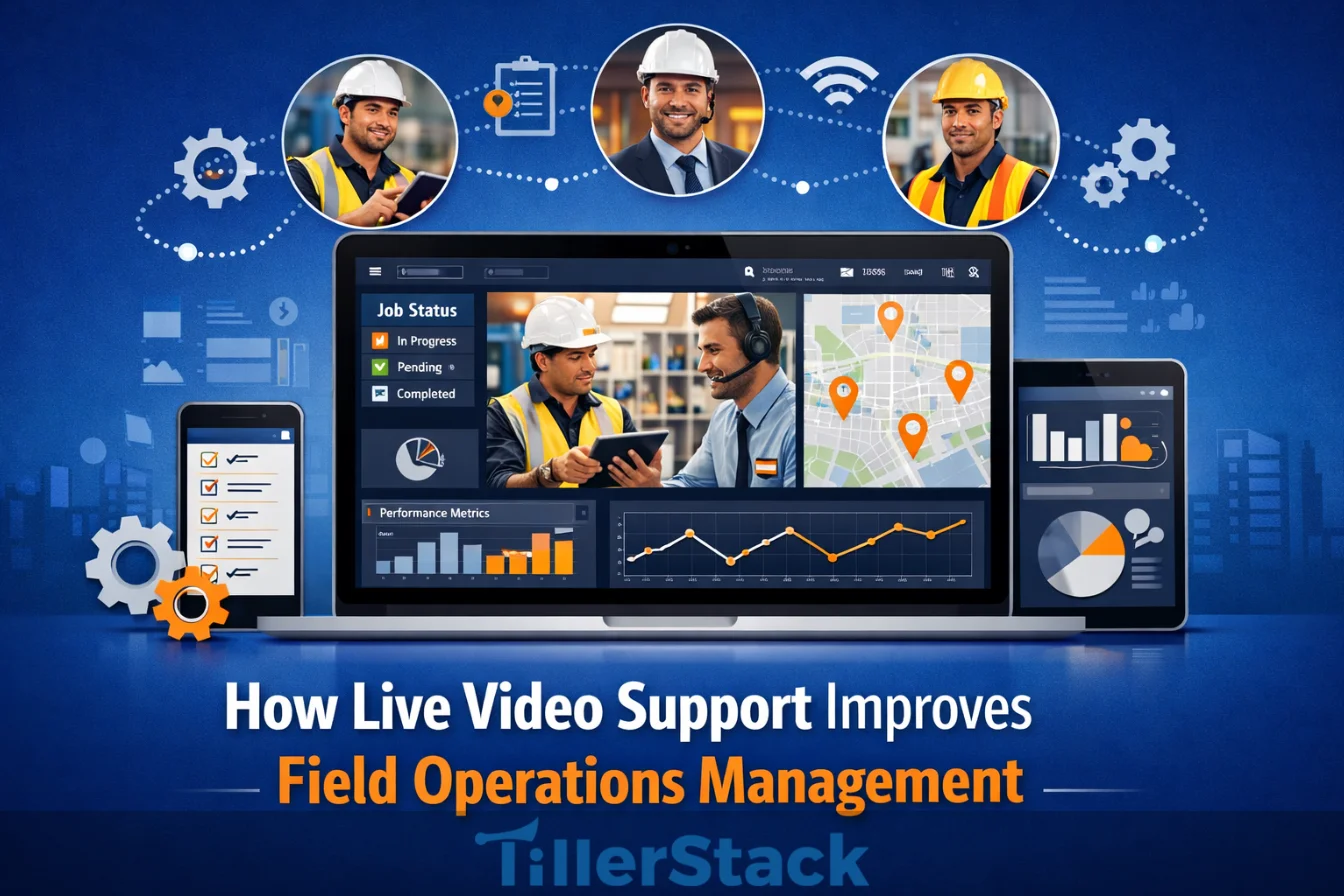
How Real-Time Technical Support Is Transforming Remote Field Services
Today’s remote field service teams require real-time technical support as field operations become increasingly complex and geographically dispersed. Modern field environments now consist of advanced equipment, distributed assets, and higher service expectations, which leads to technicians relying narrowly on manuals or escalating issues after visiting the customer. Without quick access to expertise, a small problem could turn into long downtime and, ultimately, service delays. Companies are moving away from reactive workflows and adopting real-time support to connect technicians with experts as soon as issues arise.
This shift signifies a greater transition in the industry from reactive problem-solving via tickets to proactive and instant support processes. By enabling instant collaboration, real-time models reduce uncertainty in the field and help technicians make accurate decisions while work is actively underway.
Technicians can instantly tap into expert experience through connected digital workflows and immersive collaboration tools, eliminating the need for travel, call-backs, or secondary site visits.
What Is Real-Time Technical Support in Remote Field Service?
The concept of real-time technical support in remote field service implies the ability to deliver instant expert guidance within the support field without delays caused by traveling or escalations. Unlike traditional customer service models, which are often reactive and limited by time, this method provides real-time customer service by responding through TillerStack’s connected digital workflows.
Real-time support significantly improves field operations by eliminating waiting times and reducing the need for manual transfers between parties involved.
Additionally, it yields more accurate results, reduces downtime, and facilitates quicker problem resolution in challenging operating environments.
Challenges in Remote Field Services?
Remote operations in the support field face challenges due to a lack of training, a lengthy problem-solving process, and the need to travel for field technology services that are becoming increasingly expensive.
Skill Gap
The performance and expenses of field service companies are adversely affected by the widening skills gap. Service sectors have an enormous labor shortage of approximately 2.6 million workers, and practically 73% of the field service companies are having problems with labor shortages of skilled technicians because of the lack of technical expertise.
This gap slows response times, as a large number of issues are being solved by highly skilled workers, and service costs are substantially higher because less-skilled workers require a longer time to identify and fix the problems.
Did you know? The bottom performers can be 67% more expensive than the top performers.
Delayed Resolutions
Since field teams do not have access to real-time expertise, they typically experience delayed resolutions that impact their entire operations. A study revealed that around 60% of the jobs technicians perform are followed by return trips, often due to a lack of proper information or the unavailability of required parts, which results in longer and more expensive service visits.
Such delays can cause the overall service cost to rise by 25-30% due to inefficient use of labor, fuel, and productivity loss, illustrating how uncoordinated, disconnected support processes hinder timely problem-solving.
Travel Costs
In traditional field service models, travel remains a significant factor that strains costs.
Increasing travel and labor costs have contributed to a rise in overall service costs, with a roughly 6-8% hike in travel-related costs and gas prices significantly higher than those of previous years, which in turn intensify expenses related to technician dispatches.
The impact of these travel burdens increases when first-visit resolutions fail, requiring technicians to make additional trips that consume time and resources that could have been used for new service calls.
This is, in fact, a reminder that traditional model support is ineffective and that smarter, real-time solutions such as TillerStack are needed.
How AR Remote Assistance Is Powering Real-Time Field Support?
The use of AR remote assistance for field service enables real-time collaboration in the field through a combination of live video, interactive overlays, and expert knowledge.
Through this immersive method, technicians gain insight into exactly what experts see, receive step-by-step instructions, and troubleshoot issues more efficiently, thereby enhancing the effectiveness of real-time technical support across the entire support area.
An AR remote assistant establishes a connection between the technician and an AR remote expert who provides contextual guidance via remote visual assistance, eliminating guesswork and miscommunication.
The Role of Remote Visual Assistance in Solving Complex Field Issues
Remote visual assistance has significantly increased real-time technical support, as experts can now visually assess problems instead of relying solely on verbal explanations.
Through live video sharing, annotations, and visual context, technical experts and specialists can work together simultaneously, thereby minimizing the chance of misunderstandings and speeding up the decision-making process in complex field situations.
This view-first approach enables specialists to identify areas of concern, outline remedial steps, and provide clear instructions, all while being physically present on site.
Work becomes safer, and the quality of service in the field improves, becoming both faster and more uniform. Instructions that are easier to understand and have fewer mistakes lead to reduced, repetitive work and higher adherence to the rules, building more trust when employees execute important tasks in the real workplace.
Benefits of Real-Time Technical Support

The strategic effect of real-time technical support goes beyond faster fixes to long-term operational efficiency.
Faster Issue Resolution
When a fault appears, the system connects the on-site technician with a specialist immediately, and the issue is resolved without delay.
Additionally, the teams are not put on hold or forced to wait for a technician to return; instead, they are provided with live support, which minimizes downtime and helps prevent problems from occurring.
This pace improves the efficiency of the workforce, ensuring that customers receive faster and more reliable service.
Cost Savings
Real-time support minimizes site visits and repeat trips, thereby significantly reducing travel, labor, and operational costs.
Moreover, by supporting multiple technicians remotely, organizations can maximize the utilization of expert availability, thereby reducing overtime and resource waste. These efficiencies result in more stable service costs and improved operational margins.
First-time Fix Rates
The probability of accurately fixing problems on the first visit is significantly higher when people can access expert advice immediately. Visual collaboration and live help tend to eliminate errors, incorrect diagnoses, and redoing work, resulting in high rates of getting things right the first time. This, in turn, not only elevates the technician’s assurance but also enhances customer satisfaction and strengthens long-term service performance.
With real-time support and customer support powered by TillerStack’s Flow digital platform, field teams significantly reduce the time lost while specialists resolve problems without making unnecessary trips to the site.
These benefits position real-time support as a critical capability, given the importance of attaining scalability and customer satisfaction in on-site service.
Platforms Enabling Real-Time Technical Support: What to Look For?
To be truly effective, software for augmented reality remote assistance must be tailored to the specific needs of field tech services, including mobile access, high-level security, and seamless integration with AR.
Platforms for real-time assistance, such as Tillerstack, can utilize secure mobile access, live AR overlays, and even integration with existing workflows to assist technicians in fast-changing, field environments.
These features enable technicians to receive precise and actionable guidance without interrupting work at the site. Experts can remotely supervise multiple technicians with live AR overlays and workflow integration, reducing downtime and travel costs.
Choosing field-focused software over traditional messaging or video tools ensures faster resolutions, higher accuracy, and a more confident workforce.
Industry-Specific Use Cases for Real-Time Technical Support
Due to the increasing complexity of operations that several businesses face, real-time technical support is becoming a must-have across all industries. Companies, from automotive workshops to utility grids, are utilizing the best real-time communication platforms, multilingual support, and automotive services to enhance their remote field service teams.
These solutions, which provide instant assistance and expert access, not only solve problems faster but also reduce mistakes and improve the quality of real-time customer support across various settings.
Automotive service & Manufacturing
In automotive workshops and manufacturing plants, technicians frequently encounter complex machinery that requires precise adjustments.
With TillerStack, experts can provide real-time technical support to the onsite staff, thus allowing troubleshooting to be done immediately and reducing expensive downtime.
The multilingual AR tools also enable multilingual support for automotive services, which is very beneficial for technicians working in different regions, as they will receive instructions in their own language and thus be able to resolve issues efficiently.
Utilities & Energy
Field teams that work for the utilities and energy sectors encounter geographically dispersed assets that require timely interventions.
TillerStack, with its augmented reality and remote field service functionalities, enables experts to provide real-time customer support. They can visually identify issues and guide field teams without needing additional personnel on site.
This improves operational efficiency and enhances safety while maintaining high service reliability.
Telecom & Infrastructure
Telecom and infrastructure teams must maintain their critical networks, as any interruptions could impact essential services.
By leveraging the best real-time communication platforms, multilingual support for automotive services through TillerStack, experts can provide remote guidance to on-site technicians who will be dealing with network failures or faulty equipment.
This guarantees quick response, reduces travel costs, and maintains service continuity across multiple regions.
Multilingual & Cross-border Support Scenarios
Global operations often encounter language and cultural challenges that hinder effective field support.
TillerStack’s platform provides real-time technical support with multilingual features, enabling specialists to provide precise instructions to technicians located anywhere in the world.
This enhances collaboration, accelerates the resolution of issues, and improves real-time customer support for international clients.
The Business Impact of Real-Time Technical Support in Remote Field Services
Adopting real-time technical support drastically reduces downtime and operational costs across remote field service operations.
With real-time support, technicians can fix problems on the spot without waiting for an expert’s travel time or follow-up visits, thereby minimizing service interruptions and unnecessary expenses.
TillerStack, while also providing fast, more efficient resolutions and satisfying customers, has a flexible support model that provides increased productivity and increases the productivity of staff while continually adapting to changing needs in field services.
Conclusion
Real-time technical support has significantly changed the traditional way of handling remote field operations by enabling faster resolutions, reducing downtime, and increasing the confidence of technicians.
With the help of augmented reality field service support, TillerStack empowers teams to collaborate visually, gain instant access to expertise, and resolve complex issues without the delays of traditional service models.
As field environments continue to evolve, AR-powered real-time support is no longer regarded as optional, but rather as a necessity and a strategic advantage that will propel organizations toward scalable growth, operational excellence, and superior service outcomes.
To see how this capability comes to life in real-world operations, explore TillerStack OSRA, a platform designed to provide immersive, expert-led field support at scale.
Step into smarter field service—Book a Live OSRA Demo and see real-time support transformation in action.